
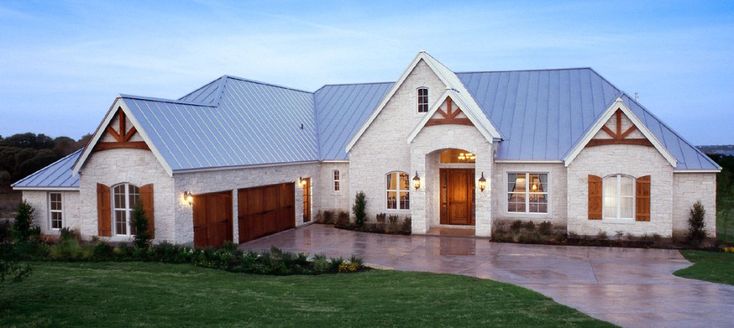
Building a home of your dreams isn’t child’s play. It’s a carefully thought-out decision— something that represents your consistency, perseverance, and hard work.
Noting that, choosing a custom build for your home requires experts in the field. Land purchase & consequent construction to final mortgage (C2P) conversion— custom home financing is always done right with a reliable broker.
Not only do such mortgage brokers provide you with flexible lending options, but they also help you navigate through finances.
So, it doesn’t matter if you have a stable flow of income or are in a currently struggling phase of life. Scenarios where banks would give a clear and inconsiderate ‘no’, brokers don’t bring your spirits down with disappointing answers.
In reality, efficient mortgage brokers make it easier to secure a property by reducing costs.
To get better insight into the subject, read through the guide below.
What’s Financing for a Custom Home?
In simple terms, financing for a custom home (or construction loan) refers to the “specialized mortgage that an individual takes with the help of an experienced mortgage broker”.
Though the definition might be short, the idea is more complex than it appears to be. Paired with a specialized, multi-stage borrowing process, this type of financing focuses on builder approval, project budget, and gradual disbursement of funds according to completion of project milestones.
To build a better understanding, financing for a custom home features the following:
- Construction loan → with a high interest rate.
- Draw fund release system → where funds aren’t given out all at once, but released in particular stages, each being specific to the stages of construction, such as (1) laying down the foundation, (2) developing a frame, and (3) installing a roof.
- Easy payments → interest is only meant to be paid on the amount that has been drawn at a particular stage (and not applicable on the full amount at once).
- Permanent Mortgage → secured upon completion of the construction project, which typically converts the mortgage system into a traditional, long-term one.
For some people, flexibility is more important than securing a property with a lower down payment. The option of financing for a custom home is suitable for individuals who don’t prefer a pre-made build.
How Custom Home Financing Differs from Traditional Mortgage
Contingent on how the human mind works, nobody wants to make a huge investment without adding a part of their individuality to it. If you consider the kids who have grown up now, all they remember about their childhood home is its vibe.
Thus, it only makes sense that a considerable portion of society moves towards investing in custom builds. Instead of going for pre-made options with a traditional mortgage, many families make smart decisions.
Take a look at this table to understand how construction loans (financing for a custom home) differ from traditional mortgages.
Aspect | Construction Loans | Traditional Mortgages | |
| 1. | Purpose | For building a new home | For purchasing an existing, pre-made home |
| 2. | Loan Term (Tentative Duration) | Short-term (≈6 months to 18 months) | Long-term (≈15 years to 30 years) |
| 3. | Release of Funds | Distributed in stages (in accordance with the milestones achieved for the building project) | Lump sum released at once (at deal closing/ upon reaching an agreement) |
| 4. | Payments (with Interest) | Payment of interest is only required during the construction process | Principal payment and overall interest from the start are required |
| 5. | Interest Rates | Higher yet variable | Lower yet fixed |
| 6. | Down Payment | ≈20% to 30% | ≈3% to 20% |
| 7. | Collateral (to secure the deal) | Land and custom home build (to be built in future) | Existing home |
| 8. | Approval Process | Requires approval of the builder and a comprehensive construction plan | Requires credit and debt-to-income ratios |
What Makes Custom Home Financing Better?
An option becomes better when it gives you the advantage of feasibility. So when a personalized approach to home building comes forward, it becomes a preferable choice for Canadians.
As a borrower, you only have to pay interest at the point when funds are released for construction. This way, until the construction process is completed, you get to pay lower sums instead of paying heavy amounts.
The construction loan simplifies the process by covering the cost of the property, along with the infrastructure built over it. Not only that, but it also ensures that you’re paying for finished work instead of settling for unfinished building stages.
Financing Options for Custom Home Builds
It’s healthy to have options when deciding on something as big as moving into a new home. But before you get started with its construction, you need to pay attention to the financing options you have available. So if you’ve set your mind to building a custom home, then you’d be interested in knowing what each of the opportunities means for you.
Here’s a brief explanation of the custom home financing options you can take advantage of:
1. Construction-to-Permanent Loan (C2P)
- A single-close loan
- Covers costs for building phase & final mortgage
- One set of payments to be made at a time
- Easy way in, easy way out
- Suitable for people wanting save on legal fees
2. Standalone Construction-Only Loan
- A short-term loan (takes between 6 months and 18 months)
- It is separate from the mortgage
- Enforces a new mortgage following the completion of construction
- Requires a larger down payment
- Suitable for people who own land
3. Land Loan
- A loan for securing an empty lot
- Acquired prior to starting a building project
- Avoided by lenders, resulting in a higher down payment (20% to 25%)
- Suitable for people not immediately starting with construction (in a year or two)
4. Owner-Builder Loan
- A loan where you’re your own boss
- You don’t hire a general contractor (GC); you become one
- Riskier, which is why this loan is difficult to secure
- Demands proof of construction experience
- Suitable for experienced builders and contractors
5. Government-Backed Loans
- A loan insured by a government agency (such as the CMHC)
- Encourages new home construction
- Gives the advantage of lower down payments (5% to 10%)
- Requires strict approval, hefty insurance fees
- Suitable for people preferring smaller down payments
Navigating through all these custom home financing options can make things quite confusing for you. You must share your concerns and goals with people who have expertise in the field. That being said, a mortgage broker is your best shot at securing quality C2P deals— adhering to your financial flexibility.
Advantages of a Professional Financing Guide
You may be under the impression that signing a mortgage deal isn’t as complex as people term it to be. However, the reality is quite different, as professional financial guides (mortgage brokers) specialize in construction, serving as reliable financial advisors for your home-building journey.
Here’s how you’re at an advantage with a mortgage broker by your side:
- Acts as a single point of communication between you, builders, and lenders
- Expert navigation and assessment among complex loan types
- Power and knowledge to customize the loan according to your requirements
- Extended access to reliable lenders (a wide network of banks, credit unions, and private lenders)
- Skills to secure deals by obtaining faster approvals
- Prevents overspending with a realistic budget timeline
- Evaluates the project in detail, reviewing the work from the builder(s), architect(s), and engineer(s)— consecutively keeping the lenders on the same page
- Top-notch negotiation power among all parties involved— resulting in lower costs & interest rates
- Efficient management of delays
- Thorough documentation— for bank statements, tax returns, detailed plans, and contracts
Consult With the Best on the Field Today
Custom home financing is a complex process that demands time, experience, and strong negotiation skills to secure the best deals. You can’t navigate in this zone with your pre-existing knowledge of mortgages and finances.
Rather, you’ll need to think & act smart. With the help of reliable mortgage brokers, you can effectively navigate through existing lender deals to suit your needs. Whether it’s about detailed budgets, land purchase, or seeking approval from the builder, a skilled mortgage broker can sort it.
Though in order to get started with it, you’ll need to consult with the best in the mortgage field. Having funded billions in loans, the Doctor Finance team at OMJ Mortgage is equipped to meet the needs of your custom build finances. By leveraging our extensive networks, our firm offers our clients a vast array of privately funded mortgages in Ontario.
Skip the guesswork. Consult with the best brokers today.
FAQs
What to know before buying a house in Canada?
A down payment between 20% to 25% of the range and above a 680+ credit score should always be expected. It also involves a rigorous process of inspection to have the funds released for the commencement of construction.
What’s the best way to finance building a new home?
The most preferable way to finance a new home build is a construction-to-permanent (C2P) loan, which encompasses land purchase, construction costs, and consequent conversion to a mortgage upon completion.
What are the advantages of a mortgage broker as a medium of finance?
A broker acts as a mediating party between borrowers and lenders, offering advantages in choice, expertise, and efficiency. Here, the borrower’s financial situation is thoroughly considered before making the proposition for a loan.
What’s better for custom home financing, a mortgage broker or a bank?
Compared to the bank, consulting with a mortgage broker to finance a custom home build is always a better option. Through the means of a broker, you can get access to a wider range of lenders offering niche custom builds.
